
The Enduring Legacy of Bronze
A Metal That Changed Civilization
Bronze, one of humanity’s earliest metal alloys, has a rich history dating back over 5,000 years. First developed around 3300 BCE, during the Bronze Age, it marked a major technological advancement as ancient civilizations discovered that combining copper with tin created a much harder and more durable material. This innovation transformed tools, weapons, and art across cultures—from Mesopotamia and Egypt to China and Europe. Revered for its strength, resilience, and warm, lustrous color, bronze continues to be used today in sculpture, architecture, and design, linking modern craftsmanship to a legacy that began in antiquity.
Bronze Jewelry: Ancient Beauty, Modern Inspiration
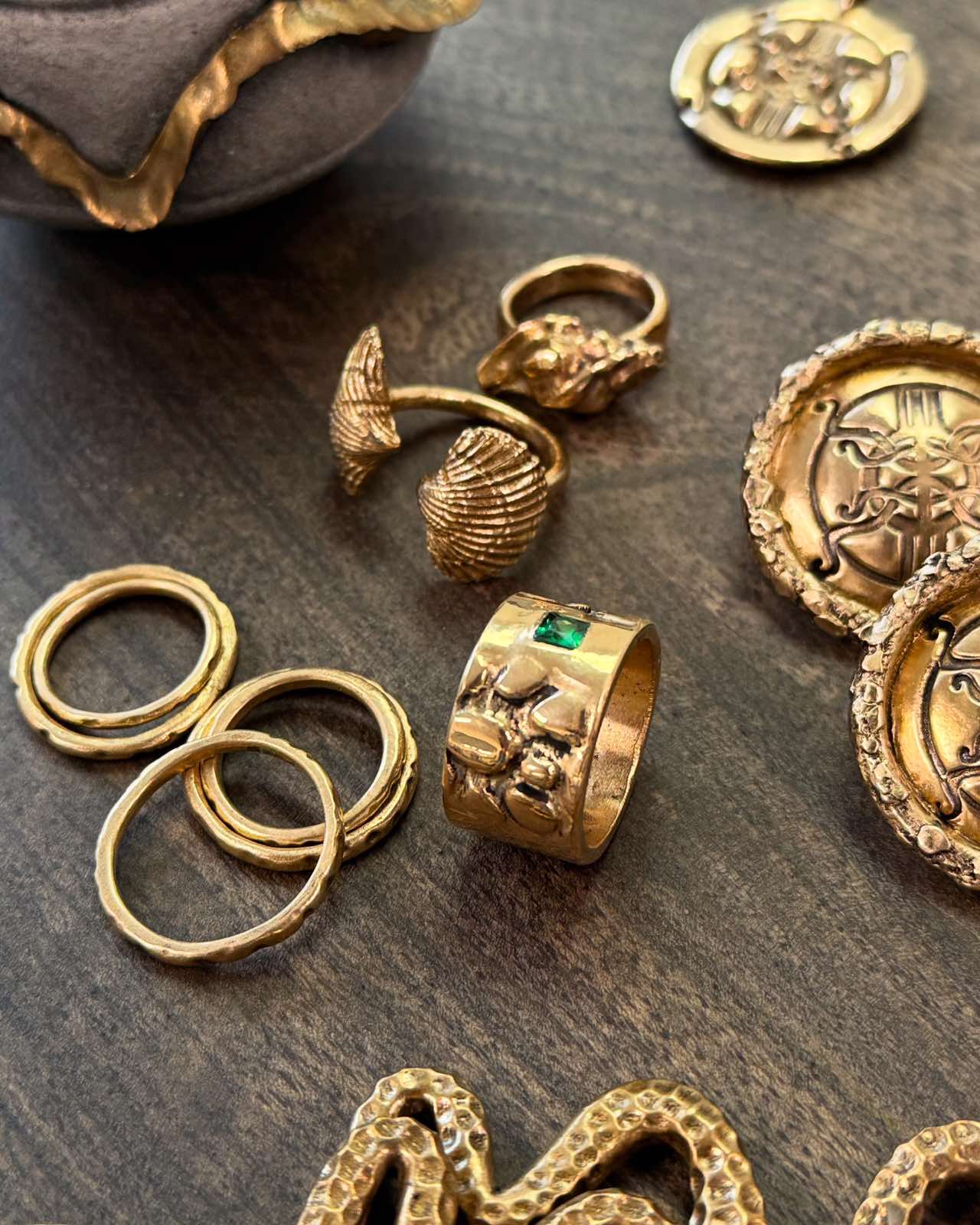
Bronze jewelry has adorned people for thousands of years, with some of the earliest known pieces dating back to ancient Mesopotamia and Egypt. As societies discovered the beauty and workability of bronze, artisans began crafting rings, bracelets, pendants, and decorative amulets that reflected both personal status and cultural symbolism.
Unlike gold or silver, bronze offered a more accessible yet equally expressive medium, allowing a wider range of people to wear ornamentation. Over time, bronze jewelry became not only a form of personal adornment but also a means of storytelling, ritual, and artistic expression—a tradition that continues in contemporary designs inspired by ancient forms.
Why Bronze Remains Popular Today
- Durable and beautiful: Bronze resists corrosion and develops a unique patina.
- Accessible artistry: More affordable than gold or silver, yet highly expressive.
- A living tradition: Modern artists and jewelers build on a legacy dating back to the Bronze Age.
Bronze jewelry is not only durable and affordable but also develops a unique, warm patina over time, adding character to each piece. Additionally, some believe bronze has healing properties, such as promoting circulation and reducing inflammation when worn against the skin.